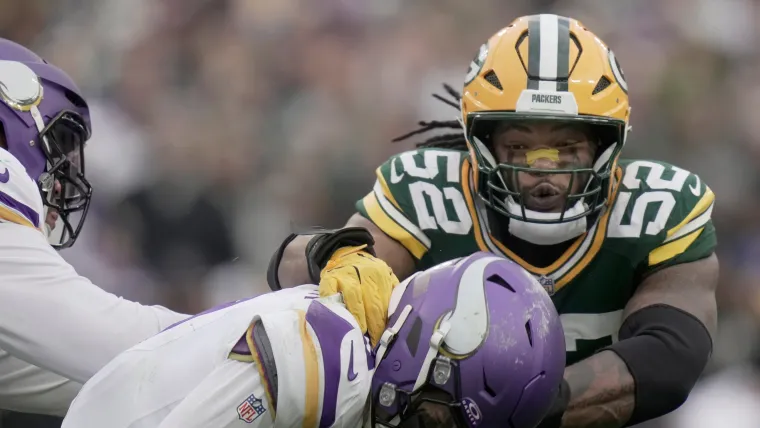
The End of an Era: Unpacking Rashan Gary's Farewell to Green Bay
The Green Bay Packers are facing a significant shift in their defensive landscape following the unexpected departure of edge rusher Rashan Gary. On Friday, Gary, a 2019 first-round pick and the team’s longest-tenured player, publicly announced his exit via social media, a post he later deleted. This announcement, though swiftly retracted, signaled the end of a complex tenure and initiated widespread speculation about the future of the Packers' pass rush. While the specifics of whether it will be a release or a trade remain to be clarified as the new league year approaches, the implications of Rashan Gary's farewell are profound for both the player and the storied franchise.
Gary's time in Green Bay has been a rollercoaster of high expectations, flashes of brilliance, and recent struggles. Drafted out of Michigan, he slowly but surely developed into a formidable force, culminating in a breakout 2021 season where he recorded a career-high 9.5 sacks and 28 quarterback hits. This performance cemented his status as a key piece of the Packers' defense, leading to a lucrative four-year, $96 million contract extension signed during the 2023 season. This deal, with two seasons remaining, positioned him as a cornerstone. However, a torn ACL in 2022 cast a long shadow, and while he returned to play, his production hasn't consistently matched his pre-injury elite level.
The financial aspect of this move is substantial. Gary was set to carry a staggering $28 million cap number, second only to quarterback Jordan Love. His departure, whether by trade or release, is projected to free up approximately $11 million in cap space for the current year, according to Over the Cap. This newfound flexibility provides the Packers with crucial breathing room as they navigate the complexities of the salary cap and look to reinforce their roster. For a deeper dive into the financial ramifications, you can explore
Rashan Gary Departs Packers: Unpacking the $11M Cap Relief.
Production vs. Price: The Driving Force Behind the Split
Ultimately, the decision to part ways with Rashan Gary appears to stem from a perceived mismatch between his recent on-field production and his hefty salary. General Manager Brian Gutekunst, Head Coach Matt LaFleur, and former defensive coordinator Jeff Hafley had publicly defended Gary's impact even as his statistics wavered. Gutekunst, at the NFL Combine, acknowledged Gary's ability to create 60 pressures and 7.5 sacks, calling it "tough to replace" and expressing an expectation for him to play at that level or higher. LaFleur even offered a peculiar justification, stating Gary was "never a high snap-count guy" despite his $24 million annual salary.
However, the raw numbers tell a different story, particularly from the latter half of last season. While Gary started strong, recording an impressive 7.5 sacks and tying for 11th with seven tackles for loss through the first eight weeks, his output dramatically vanished afterward. From Weeks 10 through 18, Gary registered no sacks or tackles for loss, a period during which hundreds of other players across the league managed to do so. Despite not appearing on the injury report, his pressure percentage also dipped significantly, ranking 39th among players with at least 100 pass-rush snaps during that span. As the 13th-highest-paid edge rusher in the league, his late-season performance raised questions about his value. This stark contrast between early-season dominance and late-season disappearance likely solidified the organization's difficult choice. For a detailed breakdown of his contract versus his performance, read
Packers' Rashan Gary Farewell: High Contract vs. Production Dip.
The Green Bay Edge Rusher Room: Who Steps Up?
With Rashan Gary now out of the picture, the Green Bay Packers' edge rusher room faces a significant void and an immediate need for new leadership and production. The remaining core consists of some promising, yet unproven, talent:
- Micah Parsons: The undisputed leader and primary edge rusher, whose elite talent could define the unit. However, a major concern looms as Parsons tore his ACL in December of last season and could potentially miss the first month of the upcoming season finishing his rehab. His health and swift return are paramount.
- Lukas Van Ness: A 2023 first-round pick, Van Ness is now thrust into an even more prominent role. His rookie season showed flashes of potential, and the expectation will be for him to take a significant leap in his second year, particularly in generating consistent pressure and run defense.
- Barryn Sorrell: An intriguing prospect who will compete for increased snaps and a role in the rotation.
- Collin Oliver: Another young player looking to carve out a niche and prove his worth.
Adding to the uncertainty, Kingsley Enagbare is set to hit unrestricted free agency, and Brenton Cox Jr. will be a restricted free agent. Their futures with the team are currently unclear, potentially further depleting the unit's depth. The onus will now fall heavily on Van Ness to accelerate his development and for other rotational players to step up, especially if Parsons' recovery timeline extends.
Strategies for Reinforcement: Navigating the Post-Gary Landscape
The Packers now have multiple avenues to explore to reinforce their edge rusher depth and ensure the defense remains impactful. The $11 million in cap savings, though offset by over $17 million in dead money, offers some much-needed flexibility.
1. Leveraging the NFL Draft
The upcoming NFL Draft will undoubtedly be a prime opportunity for Green Bay to address their pass-rush needs. Given the talent pool, the Packers could target an edge rusher in the early rounds to secure a high-upside player who can contribute immediately.
- Early Round Focus: Look for prospects with a blend of athleticism, bend, and power. The Packers typically favor versatility in their defensive linemen.
- Depth in Later Rounds: Even if a top-tier rusher is selected early, adding more depth in mid-to-late rounds is crucial for building a sustainable rotation.
2. Exploring Free Agency
While the top-tier free agents may already be off the market, the Packers could still pursue veteran free agents who offer either a proven pass-rush presence or reliable run defense.
- Targeting Value: Look for veterans who might be looking for a new home and can contribute on a reasonable contract, potentially as a situational pass rusher or a run-stopping specialist.
- Rotational Pieces: Finding a player who can seamlessly fit into a rotation alongside Parsons and Van Ness will be key to maintaining freshness throughout the season.
3. Internal Development
The most cost-effective and potentially impactful strategy is to maximize the development of existing talent.
- Lukas Van Ness's Leap: The coaching staff will prioritize Van Ness's growth, expecting him to expand his pass-rush repertoire and improve his consistency against both the run and the pass.
- Unearthing Hidden Gems: Sorrell, Oliver, and potentially re-signed players like Cox Jr. will have increased opportunities to prove they belong in the rotation.
This strategic blend of drafting, free agency, and internal growth will be critical for the Packers to maintain their defensive identity and continue putting pressure on opposing quarterbacks.
Conclusion: A New Chapter for the Packers' Pass Rush
Rashan Gary's farewell marks a definitive turning point for the Green Bay Packers' defense. While his early-season dominance last year was a testament to his talent, the subsequent decline in production, coupled with a significant contract, made the decision to part ways a difficult yet financially logical one for the franchise. The void he leaves is substantial, particularly in consistent pass rush and leadership.
However, this change also ushers in a new era of opportunity. It clears significant cap space, providing flexibility to address other roster needs, and it opens the door for young talents like Lukas Van Ness to step into more prominent roles. The immediate focus will be on Micah Parsons' recovery and the upcoming NFL Draft and free agency periods, which will be vital in shaping the defensive line for the foreseeable future. The Packers are now tasked with rebuilding and redefining their edge rusher identity, embarking on a new chapter with a mix of challenges and immense potential for growth.